Loading...
First Round of Abstract Submission Ends: Dec 31, 2026
Extended Early Bird Ends: Sep 28, 2026

Plenary Speakers

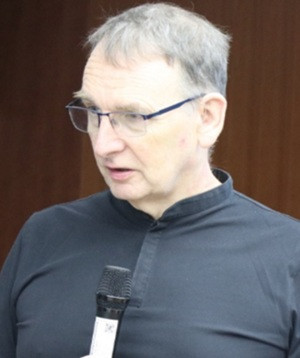
Prof. Tony Cass
Imperial College London, UK
Title: To be confirmed
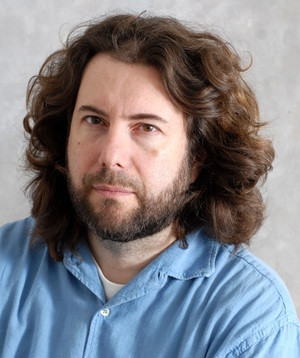
Tony graduated from the Universities of York and Oxford where he received respectively BA and DPhil degrees in Chemistry. It was during a research fellowship in Oxford that Tony invented a much more efficient way to transfer electrons from the active site of a redox enzyme to a carbon electrode. This apparently esoteric invention led a small UK company to produce the first fully electronic device to accurately measure glucose in a tiny drop of blood at home and revolutionised the management of diabetes for millions of patients around the world. It also bought Tony back to London and an appointment at Imperial College where he helped establish a Centre for Biotechnology. His current research is at the intersection of chemistry, biomedical engineering and clinical diagnostics developing new sensing devices, especially point of care diagnostics and wearables that allow for the real time monitoring of the body’s chemistry.
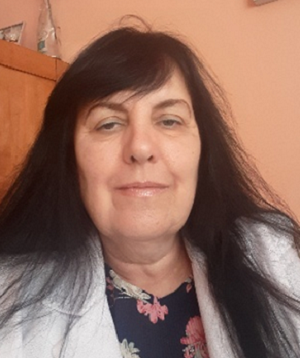
Prof. Lucie Bacakova
The Czech Academy of Sciences, Czech Republic
Title: Engineering Small-Diameter Vascular Grafts with Physiological Vessel Wall Layers
Assoc. Prof. Lucie Bacakova, MD, PhD, graduated from the Faculty of General Medicine at Charles University in Prague in 1984. She then joined the Institute of Physiology of the Czechoslovak Academy of Sciences, where she received her PhD degree in 1992. She completed three research fellowships, namely at the University of Washington, Seattle, USA (Prof. Stephen M. Schwarz, 1996; topic: vascular biology), the University of Pavia, Italy (Prof. Carlo Pellicciari, 2000; topic: flow cytometry of adhesion and differentiation markers) and the University of Pennsylvania (Prof. Dennis E. Discher, 2000-2001; topic: cell-material interaction). In 2005, she founded a new Laboratory of Biomaterials and Tissue Engineering at the Institute of Physiology. In 2013, she was appointed associate professor at the Second Faculty of Medicine of Charles University in Prague. In 2022, she received the prestigious "Praemium Academiae" award. She has published more than 300 articles (WOS Core Collection: 10,744 citations in total; 9,539 excluding self-citations; h-index: 48).
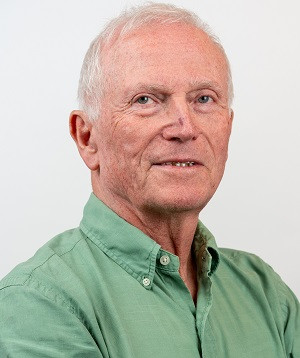
Prof. Joseph Kost
Ben-Gurion University of te Negev, Israel
Title: Nano-Scale Systems and ultrasound for Targeted therapies
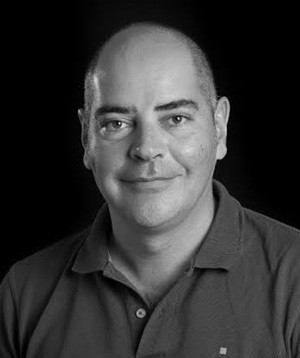
Joseph Kost D.Sc. is University Distinguished Professor, he holds The Abraham and Bessie Zacks Chair in Biomedical Engineering and was the Dean of the Faculty of Engineering Sciences at Ben-Gurion University of the Negev (BGU). Kost completed his undergraduate and graduate degrees in Chemical Engineering at the Technion, Israel Institute of Technology, before earning a doctorate in Biomedical Engineering at the same institution. Later he also earned an M.B.A. from BGU’s Department of Management. Based on the ultrasound technology pioneered by Kost, several companies have been founded. One of these is with him serving as the Chief Scientific Officer, developed the 1st non-invasive FDA-approved device, the SonoPrep®, for delivering drugs (Lidocaine) through the skin using ultrasound. He is a Fellow of the American Institute for Medical and Biological Engineering, an International Member of the United States National Academy of Engineering (NAE), an Honorary Fellow of the Israel Institute of Chemical Engineers, a Member of the Controlled Release Society College of Fellows, and a Member of the Israel Academy of Sciences and Humanities. His research interests are in the field of biomedical engineering, medical devices, biomaterials science, controlled drug delivery, gene therapy and ultrasound.
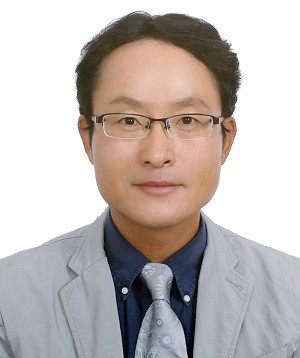
Prof. Hyun Gyu Park
Korea Advanced Institute of Science and Technology, South Korea
Title: Advances in Nucleic Acid Engineering: From Isothermal Molecular Diagnostics to RNA Therapeutics
Dr. Hyun Gyu Park is a Professor in the Department of Chemical and Biomolecular Engineering at KAIST. He received his Ph.D. from KAIST in 1996 and joined the KAIST faculty in 2002 after serving as a Senior Research Scientist at the Samsung Advanced Institute of Technology. He is currently the Director of the KAIST-Harvard Research Center for New Diagnostic Technologies for Emerging Infectious Diseases and a Member of the National Academy of Engineering of Korea. Dr. Park's research focuses on nucleic acid engineering, molecular diagnostics, biosensors, and biochip technologies. He has published over 250 SCI(E) papers, holds 134 domestic and international patents, and has an H-index of 58 with more than 11,700 citations. He currently serves as Associate Editor of Biosensors and Bioelectronics and holds editorial positions for several leading international journals, including Current Opinion in Biotechnology, Biotechnology Journal, and Chemosensors.
Prof. Robert S. Marks
Ben-Gurion University of the Negev, Israel
Title: A career in One Health development of biosensors and spin-offs thereof
My research focuses on the development of biosensors designed to meet market needs and specific niches through innovative research. We have established a multidisciplinary group that has innovated in all aspects of biosensors research, including biospecific entities, chemical funtionalization and transducer configurations. In addition, this has enabled us to innovate in diagnostic devices in making them quantitative at the true POC. Most of our devices have been tested using real life samples and therefore we have developed a network of international collaborations to test them in all continents. Thus, we address all aspects of biosensor technology and its implementation to field trials. Our current efforts focus on the use of biosensor and diagnostic technologies in medicine, food security and the environment. Our drug discovery program includes anti-biofilm agents and bioactive agents from macrofungi, for which we use our novel screening panel of bioreporters. Our group has produced over 245 peer-reviewed publications and a dozen patents, some of which were licensed or generated startups. Examples of diseases for which immunosensors or genosensors were developed are Hepatitis A, B and C, Dengue virus, West Nile virus, Rift Valley Fever virus, Crimean-Congo Hemorrhagic Fever, stroke, Ebola virus, Brucellosis, and IBD.
Prof. Ramón A. Alvarez-Puebla
Universitat Rovira i Virgili, Spain
Title: Terms and Conditions for Applying SERS in (Bio)analytical Settings
Ramón A. Alvarez-Puebla is an ICREA Professor at the Universitat Rovira i Virgili (URV) in Tarragona, Spain, where he directs cutting-edge research at the intersection of plasmonics, surface-enhanced Raman scattering (SERS), and nanophotonics. His work focuses on the design of advanced plasmonic materials and their translation into ultrasensitive (bio)analytical detection platforms, with particular emphasis on applications in clinical diagnostics, environmental monitoring, photocatalysis and chemical sensing. Prof. Alvarez-Puebla has published over 240 highly cited articles, holds an extensive portfolio of international patents on plasmonic nanomaterials and detection technologies, and has a strong track record in technology transfer. He is co-founder of Medcom Advance SA, a URV spin-off company dedicated to the development and commercialization of SERS-based analytical instrumentation for the diagnosis of infectious diseases, which was later acquired by Grifols SA, underscoring the real-world impact of his innovations. He serves on the editorial boards of several leading journals in analytical chemistry and materials science. Known for his dynamic, forward-looking vision, Prof. Alvarez-Puebla seamlessly connects fundamental photophysics with real-world analytical challenges, making him one of the most influential and sought-after voices in the SERS community today.
Dr. Anka G. Ehrhardt
Merck, USA
Title: The Uncomfortable Middle: Where Biomedical Breakthroughs Live or Die
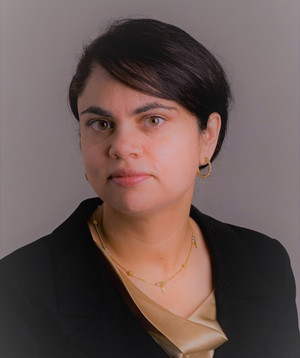
Dr. Ehrhardt provides strategic and technical leadership for biologics development at Merck, leveraging her expertise as an innovative biophysicist with a Ph.D. in human physiology. She has successfully led high-performing teams at Merck, BMS, and CHDI Foundation, advancing biomedical research through cutting-edge technologies and strategies. Dr. Ehrhardt is recognized for guiding impactful teams across drug discovery, translational and biomarker research, and drug development, delivering urgently needed treatments for critical disease areas.